5 Key Facts About Spezialbohrgetriebe in 2026: Expert Guide
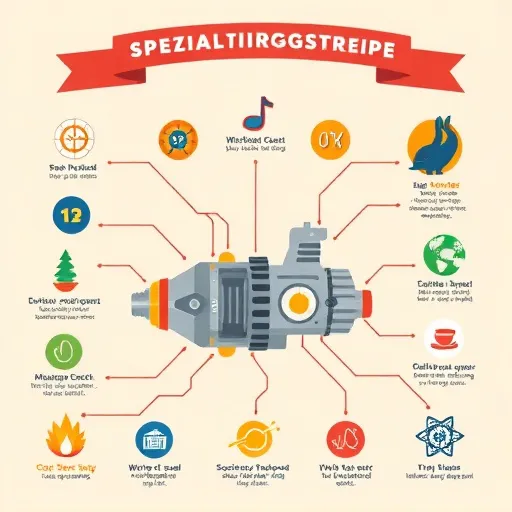
Specialized drilling
What Exactly Is a Spezialbohrgetriebe?
So, you've stumbled across the term spezialbohrgetriebe and you're probably wondering what on earth it actually means. Well, grab a coffee and let's break it down in plain English. At its absolute core, a spezialbohrgetriebe is a highly specialized mechanical transmission system engineered to convert rotational power from a motor into the precise torque, speed, and directional movement needed for serious drilling operations. Think of it as the unsung hero that sits between the power source and the drill bit, making sure all that energy gets transferred efficiently to chew through rock, soil, or whatever else the earth throws at us.
Now, here's the thing—this isn't your run-of-the-mill industrial gearbox you'd find at a factory. Unlike standard gearboxes designed for steady, predictable loads, a spezialbohrgetriebe is custom-engineered to handle extreme axial loads, intense vibration, and the unforgiving environmental conditions you find at drill sites—whether we're talking about land-based operations, offshore platforms, or deep underground in a mine shaft. The word "spezial" (meaning "special" in German) isn't just marketing fluff; it's a promise that this component has been built for a specific mission.
Because here's the reality check: these are not off-the-shelf parts. Each unit is designed for a particular application—horizontal directional drilling (HDD) for laying pipelines under rivers, vertical shaft sinking for mines, raise boring for creating ventilation shafts, micro-tunneling for urban infrastructure, or even deep geothermal wells for renewable energy. And let me tell you, in 2026, the demand for these specialized units has absolutely skyrocketed, driven by the global push for renewable energy infrastructure and the massive modernization of underground utilities in cities worldwide.
Anatomy of a Modern Drilling Gearbox: What's Under the Hood?
To really appreciate the engineering that goes into a high-performance spezialbohrgetriebe in 2026, you need to understand its core components. These aren't just gears in a box—they're precision instruments designed to survive brutal conditions. Let's take a tour inside one of these mechanical marvels.
First up, we have high-capacity thrust bearings. These are the absolute workhorses of the system, absorbing the enormous axial forces generated when you're pushing drill strings deep into the earth. In modern designs, manufacturers use advanced materials like ceramic hybrids or case-hardened steel with specialized coatings to dramatically extend service life. Without these bearings handling the pressure, the entire drill string would just seize up or snap.
Then there are the planetary gear stages—the heart of torque multiplication. Multi-stage planetary sets are now the industry standard, offering reduction ratios up to 500:1 in a surprisingly compact envelope. That's critical when you're working with space-constrained drill rigs where every inch counts. The gear geometry is meticulously optimized for high tooth root strength, using profile corrections that distribute load more evenly under shock conditions.
But here's where 2026 gets really exciting: integrated sensor arrays. A modern gearbox is no longer just steel and bearings—it's a smart device. Embedded temperature sensors, vibration monitors, and torque transducers feed real-time data to the rig's control system, enabling predictive maintenance and preventing catastrophic failures before they happen. Imagine knowing a component is about to fail weeks before it actually does—that's the power of smart engineering.
We also can't forget the flush and lubrication systems. High-pressure internal cooling loops, often using synthetic oils with nano-particle additives, ensure consistent viscosity and heat dissipation even at extreme depths and temperatures. And finally, the sealed housing and drive splines are designed with labyrinth seals combined with positive pressure systems to keep out drilling mud, water, and debris—ensuring the internal gears remain clean and well-lubricated no matter what.
Why Standard Gearboxes Just Can't Cut It in Drilling Applications
You might be thinking, "Why can't I just bolt a regular industrial gearbox onto a drill rig and call it a day?" Well, let me explain why that's a recipe for disaster. The unique physics of drilling creates conditions that would shred standard equipment. A typical rotary drill experiences shock loads that are 300% to 500% higher than what you'd see in standard industrial machinery. The drill bit doesn't cut smoothly through rock—it fractures it, creating violent, high-frequency oscillations that travel directly up the drill string and into the gearbox.
On top of that, the torque demands are wildly asymmetric. When a drill bit binds in the ground, the gearbox must withstand instantaneous torque spikes without shattering gears. Standard gearboxes, which are designed for steady-state operation, simply cannot handle this kind of abuse. They suffer from gear tooth pitting, bearing raceway brinelling, and eventually catastrophic seizure. Trust me, that's not a repair bill you want to deal with.
This is exactly why the specialized engineering of a spezialbohrgetriebe is non-negotiable. The materials are selected for toughness, not just hardness, with a specific focus on fracture toughness in the core while maintaining a wear-resistant surface. Every component is designed to absorb shock, manage heat, and keep working when everything around it is trying to break it. It's engineering designed for the real world, not just the drawing board.
The 2026 Landscape: Key Trends Reshaping Drilling Gearbox Design
As we navigate through 2026, several macro trends are fundamentally changing how these gearboxes are designed, manufactured, and maintained. Let's explore the forces reshaping this niche but absolutely vital industry.
1. The Electrification of Drilling Rigs
The days of diesel-hydraulic systems are numbered, folks. The industry is rapidly transitioning to fully electric or hybrid-electric drill rigs, and this shift has profound implications for spezialbohrgetriebe design. Electric motors deliver high torque instantly, whereas diesel engines require a build-up of RPM. This means the gearbox must manage rapid torque application and frequent start-stop cycles without overheating.
Moreover, electric drivetrains are quieter and can be controlled with millisecond precision. Modern spezialbohrgetriebe units are now designed with specific gear ratios that pair optimally with high-efficiency permanent magnet motors. The focus is on reducing energy loss through the drivetrain, with some 2026 models achieving over 98.5% mechanical efficiency. That's a huge win when you're trying to maximize battery life or reduce generator fuel consumption.
2. Deep Geothermal Energy Expansion
The global energy crisis and aggressive climate goals have accelerated investment in deep geothermal energy. Unlike traditional shallow drilling, deep geothermal requires drilling through hard, crystalline basement rock at depths exceeding 5,000 meters. Let me tell you, this environment is brutal on equipment. The temperatures at these depths can exceed 200°C—far beyond the limits of standard gearbox lubricants.
In response, the industry has developed spezialbohrgetriebe units with high-temperature resistant seals and specialized liquid cooling loops that circulate coolant through the gearbox housing, maintaining internal temperatures below 90°C even at extreme depths. These units are often paired with advanced top-drive systems that provide the necessary high torque and low speed for hard rock penetration. It's engineering at the edge of what's physically possible.
3. Autonomous Drilling Systems
Automation is no longer a futuristic concept—it's happening right now on modern drill sites. Autonomous drilling systems rely on precise feedback from every component, and the gearbox plays a critical role here. With integrated encoders and load cells, the system can detect the exact torque being transmitted and the condition of the drill string. This data allows the AI control system to adjust drilling parameters in real-time, optimizing penetration rates and preventing equipment damage.
This level of control requires gearboxes with zero-backlash capabilities. Traditional gearboxes have a slight "dead zone" where gear teeth don't mesh perfectly, but for autonomous systems, this backlash creates inaccuracy in positioning and torque sensing. Therefore, 2026 spezialbohrgetriebe designs often incorporate preloaded, split-gear configurations that eliminate backlash entirely, providing the precision needed for fully automated drilling operations. It's a whole new ballgame when it comes to accuracy.
Material Science and Manufacturing Innovations You Should Know About
The performance of a drilling gearbox is ultimately limited by the materials used. In 2026, we're witnessing a revolution in metallurgy and manufacturing processes that is pushing the boundaries of what's physically possible. Let's dig into some of the most exciting developments.
Advanced Case Hardening and Nitriding
Traditional gas carburizing is still common, but the industry is moving towards vacuum carburizing and plasma nitriding. These processes offer tighter case depth control and produce less distortion—which is crucial for large ring gears where even a few microns of distortion can lead to premature wear. The resulting surfaces have exceptional compressive residual stress, which resists the formation of fatigue cracks and dramatically extends component life.
Additive Manufacturing for Complex Housings
While mass production still relies on casting and forging, 2026 has seen significant adoption of metal 3D printing for complex gearbox housings and internal oil galleries. The ability to print intricate internal cooling channels that would be impossible to machine provides a major advantage in thermal management. Engineers can now design housings that direct oil flow precisely where it's needed, reducing churning losses and improving heat extraction. It's like having a custom-designed cooling system built right into the structure.
Nanostructured Bearings
Bearings are often the first component to fail in a drilling gearbox, but the latest 2026 models are using bearings made from nanostructured steel, which has a finer grain structure and higher resistance to rolling contact fatigue. Additionally, some manufacturers are experimenting with hybrid bearings that use silicon nitride ceramic balls, which are lighter, harder, and generate less heat than traditional steel balls. These innovations might sound small, but they make a massive difference in real-world performance.
Maintenance and Predictive Analytics: The New Frontier
One of the biggest costs associated with drilling gearboxes is downtime. When a gearbox fails on a remote drill site, it can take weeks to replace, costing millions in lost productivity. The solution in 2026 is not just to build stronger gearboxes, but to make them smarter and easier to maintain. This is where the magic of modern technology really shines.
Condition Monitoring as Standard Equipment
Gone are the days of periodic oil sampling. Modern spezialbohrgetriebe units come equipped with a suite of sensors that monitor oil particle count, moisture content, and ferrous debris levels in real-time. This data is transmitted wirelessly to a cloud-based analytics platform that uses machine learning algorithms to identify wear patterns and predict when a component is likely to fail—often weeks before any audible or performance-related symptoms appear. That kind of foresight is priceless when you're working on a tight schedule.
Modular Design for Rapid Repair
To minimize downtime, the 2026 generation of gearboxes is designed with modularity in mind. The gearbox is often split into distinct sub-assemblies: the input drive, the primary reduction stage, and the final output drive. Each sub-assembly can be removed and replaced independently without having to pull the entire gearbox from the rig. This allows for a "swap-out" repair strategy, where a faulty module is sent to a workshop while a rebuilt module is installed on-site, reducing downtime from weeks to just days. Now that's efficiency.
Choosing the Right Spezialbohrgetriebe: A Practical Guide for Engineers
If you're an engineer or project manager looking to spec a drilling rig or upgrade an existing one, the selection process can feel overwhelming. But don't worry—here are the critical factors you absolutely must consider in 2026 to make the right call.
Torque and Speed Requirements
This is the starting point, no question. Calculate the maximum torque required for your hardest drilling condition and don't forget to add a safety factor of at least 1.25 to account for shock loads. The output speed range is equally critical—you need a gearbox that can deliver the required torque at the optimal rotational speed for your drill bit type. Getting this wrong can mean constant breakdowns and missed deadlines.
Environmental and Space Constraints
Will the gearbox be operating in a confined space on a city street for HDD work? Or is it for a large offshore rig? Measure the physical envelope available and think about access for maintenance. Modern gearboxes are becoming more compact due to higher-strength materials, but they still need room for servicing. Also, consider the ambient temperature—if you're working in the Arctic, you'll need a gearbox with oil heaters to prevent lubricant thickening at startup.
Integration with Control Systems
In 2026, your gearbox needs to be a "smart" component. Ensure that the unit you choose can integrate with your existing rig control system via standard industrial protocols like EtherCAT or PROFINET. The gearbox's sensor data should be accessible via a standard API so your software team can incorporate it into your predictive maintenance algorithms. A gearbox that can't communicate is a liability in the modern drilling world.
Total Cost of Ownership (TCO)
Don't just look at the purchase price—that's only the tip of the iceberg. Look at the expected service life, the cost of spares, and the manufacturer's reputation for support. A slightly more expensive gearbox with a higher efficiency rating can save you thousands in energy costs over its lifetime. Furthermore, a gearbox with a robust condition monitoring system will save you money on unscheduled downtime, which is often the biggest hidden cost in drilling operations.
The Future: What's Next for Drilling Gearboxes Beyond 2026?
Looking beyond 2026, the trajectory is clear and exciting. We will see further integration of artificial intelligence directly into the gearbox control loop. The gearbox will not just report data—it will actively adjust its internal lubrication flow and preload based on the drilling conditions. We are also likely to see the emergence of digital twin technology, where a virtual replica of the gearbox runs in parallel with the physical unit, allowing engineers to simulate different drilling scenarios and optimize performance without risking the actual equipment.
Another exciting development is the use of supercritical CO2 as a working fluid in closed-loop geothermal systems. This requires drilling even deeper and hotter, pushing the thermal limits of current gearbox designs. Researchers are already testing ceramic gears and gas-lubricated bearings that can operate at temperatures exceeding 300°C, which would eliminate the need for liquid lubricants altogether. That's a game-changer if I've ever seen one.
Finally, sustainability is driving change across the industry. The sector is moving towards biodegradable lubricants and more recyclable materials in gearbox construction. The entire lifecycle of the spezialbohrgetriebe, from raw material extraction to end-of-life recycling, is being scrutinized to reduce the carbon footprint of drilling operations. It's about time we started thinking about the full picture.
Precision Matters More Than Ever in 2026
In the complex world of subsurface engineering, the spezialbohrgetriebe is a silent workhorse. It is the critical link between power and performance, between the surface and the deep earth. As we navigate 2026, with its demands for cleaner energy, more efficient infrastructure, and smarter automation, the role of this specialized gearbox has never been more important.
Whether you are involved in installing a new fiber optic cable under a river, drilling a deep geothermal well to heat a city, or extracting critical minerals for the green transition, the reliability and efficiency of your entire operation hinge on this one component. Investing in a high-quality, modern spezialbohrgetriebe is not just a mechanical decision—it's a strategic business decision that affects your project's timeline, budget, and ultimate success.
So, the next time you see a drill rig on the horizon, remember the complex engineering hidden within its machinery. The gears are turning, the sensors are humming, and a spezialbohrgetriebe is working hard to make the impossible possible. It is, without a doubt, the precision engineering foundation that keeps our modern world connected, powered, and built.
If you're evaluating your drilling equipment options or looking to upgrade your current fleet, consulting with a specialist in custom gearbox design is your first step toward ensuring you have the right technology for the challenges of 2026 and beyond. The future of drilling is here, and it's built on specialized, intelligent, and resilient gearbox technology.