Top 7 Archives Insignia Flumoria Tips for 2026 Collectors
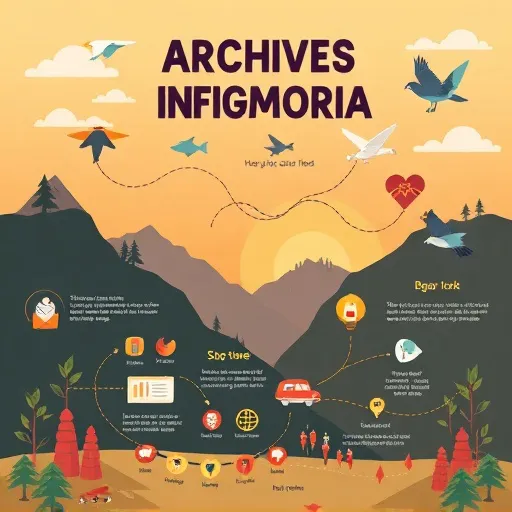
Digital record flow
What Exactly Are Archives Insignia Flumoria?
Let's break this down in plain English: archives insignia flumoria are the unique, embedded markers—think of them as digital fingerprints—that travel alongside a record as it moves through different systems, platforms, and periods of time. The term flumoria comes from the Latin word for "flow" (flumen), and that's not accidental. It captures something essential: data isn't static. It's constantly moving, shifting, and picking up new layers of context along the way, much like a river gathers sediment as it winds downstream.
So when we talk about archives insignia flumoria, we're really talking about the traceable metadata, behavioral signals, and contextual fingerprints that accumulate around a file over its entire lifecycle. Think of it as the digital patina that forms on a well-handled document—the kind of depth that tells you not just what the file is, but where it's been, who's touched it, how it's been modified, and why it actually matters in the bigger picture.
Here's the thing: in 2026, this concept has become the gold standard for organizations that need to maintain rock-solid provenance—whether that's for legal compliance, historical research, or just plain good digital housekeeping. The days of relying on a simple timestamp and file name are long gone. We need something far richer, something that gives us a nuanced understanding of our digital heritage and the journey each piece of information has taken.
The Three Core Pillars of the Flumoria Framework for Data Provenance
To really wrap your head around archives insignia flumoria, you need to understand the three core components that make up this framework. These aren't just abstract concepts floating around in academic papers—they're actionable layers you can actually implement in your own digital ecosystem today.
- Contextual Layering: This is all about the environmental data that surrounds a file. Where was it created? On what device? Under what organizational structure? In 2026, we can capture all of this automatically without invasive tracking, using passive system logs and intelligent background agents that do the heavy lifting for you.
- Relational Mapping: Files don't exist in a vacuum, and this pillar focuses on the connections between records. Which documents reference this one? Which user accessed it right before a major decision? This creates a web of meaning rather than just a linear history—it gives you the full story, not just a timeline.
- Mnemonic Encoding: This is the "insignia" part—the visual or structural marker that makes a record instantly recognizable to both AI systems and human archivists. In 2026, this often takes the form of visual hash markers or semantic watermarks that are nearly impossible to forge or strip away without detection.
When these three elements come together, you get something remarkable: a living, breathing archive. You get what experts are calling a "self-aware repository"—a system that doesn't just store data but actually understands its own contents on a deep, meaningful level.
Why Archives Insignia Flumoria Matters for AI and Regulatory Compliance in 2026
You might be thinking, "Okay, that sounds pretty cool, but do I really need this?" The answer is a resounding yes, and here's why. We've hit a critical inflection point with artificial intelligence and large language models. These systems are only as good as the data they're trained on. If your archives are a mess—full of orphaned files, conflicting versions, and missing context—your AI tools will produce garbage. It's that simple.
Archives insignia flumoria solves this problem by providing a clean, enriched data lineage. When you feed a well-insignated archive into an AI model, you're giving it the full story. The model can understand not just the text of a document, but the intent behind it, the revisions it underwent, and the authority of the source. This leads to dramatically better outputs, fewer hallucinations, and far more trustworthy results—something every organization is desperate for right now.
Beyond AI, 2026 has seen a massive surge in regulatory pressure around data provenance. Governments and industry bodies are demanding that organizations prove where their data came from and how it's been handled. The flumoria approach gives you a defensible, auditable trail that satisfies even the most stringent compliance officers. It's not just about being organized anymore—it's about being able to prove it.
The Shift from Static Storage to Dynamic Flow in Modern Information Management
One of the biggest mental shifts happening in 2026 is moving away from the idea of an archive as a warehouse and toward the idea of an archive as a river. Traditional archiving was all about locking things away in a vault. You'd store a file, add a few tags, and forget about it until you needed it. The problem? When you pulled it out, it was stale. It had lost its connection to the rest of your organization's workflow and the information lifecycle it was part of.
Flumoria flips that script entirely. It treats every record as a living entity that continues to accrue value even after it's "archived." For example, if a marketing report from 2025 gets referenced in a 2026 strategic planning document, that new connection becomes part of the original report's insignia. The old file becomes more valuable because of its new relationship—it's not just sitting there gathering dust; it's actively contributing to the organization's knowledge base.
This dynamic flow of information is what keeps archives relevant and powerful. It's a fundamental shift in how we think about digital preservation and knowledge management, and it's transforming how organizations approach their information assets.
Practical Implementation Steps for Archives Insignia Flumoria in Your Organization
Alright, let's get practical. You're convinced this is the future, but how do you actually start using it? Here's a step-by-step guide you can adapt to your specific needs, whether you're a solo creator or a massive enterprise with thousands of employees.
Step 1: Audit Your Current Metadata Schema and Data Governance
Before you can add flumoria, you need to know what you're working with. Take a hard look at your existing metadata. Are you just using basic fields like Title, Date, and Author? If so, you're starting from scratch. You'll want to expand your metadata schema to include fields for provenance chain, access context, and revision lineage. Don't try to do this all at once—start with your most critical assets, the ones that are legally sensitive or strategically important, and apply a richer metadata set to those first. Then expand outward as you get more comfortable.
Step 2: Leverage Automated Context Capture and Behavioral Metadata
You can't manually tag every file; it's just not feasible at scale. This is where 2026 technology shines. You need to deploy automated context agents that run in the background of your systems. These agents observe how files are used, who accesses them, and in what sequence. They don't record the content of the file—that's a privacy nightmare—but they do record the behavioral metadata. For instance, if a specific contract is accessed by the legal team, then the finance team, then the executive suite within a 48-hour window, the agent notes that flow. That becomes part of the insignia. It tells future users that this contract was a critical piece of a negotiation, not just a routine document sitting in a folder.
Step 3: Use Visual Insignia for Quick Recognition and Information Retrieval
Remember the mnemonic encoding pillar? This is where you get to be creative. In 2026, we have tools that can generate unique visual signatures for every file. These aren't just boring QR codes—they're complex, color-shifting patterns that encode the file's history and relationships. You can print these on physical coversheets or embed them in dashboard interfaces. Why bother? Because humans are visual creatures. When you see a file with a deep purple insignia, you instantly know it's a high-authority, heavily-referenced document. A file with a thin, light blue insignia might be a draft or a low-priority record. This visual shorthand speeds up decision-making and reduces the cognitive load on your team.
Step 4: Integrate with Your AI Workflows and RAG Pipelines
The final step is to make sure your flumoria data is actually used by your AI tools. This means feeding the enriched metadata into your retrieval-augmented generation (RAG) pipelines. When your AI assistant pulls a document to answer a question, it should also pull the insignia data to understand the context. This allows the AI to say, "Based on the most recent and authoritative version, here's the answer," rather than just regurgitating the first file it finds. This integration is what separates the leaders from the laggards in 2026. Companies that have done this are seeing a 40% to 60% improvement in the accuracy of their AI-driven insights. It's a game-changer.
Common Pitfalls to Avoid When Implementing Archives Insignia Flumoria
Of course, nothing worth doing is easy. There are a few traps you'll want to avoid when diving into the world of archives insignia flumoria. Trust me, plenty of organizations have stumbled on these before you, and learning from their mistakes will save you a lot of headaches.
- The Over-Engineering Trap: Don't try to capture every single interaction. That leads to data bloat and analysis paralysis. Focus on high-signal events: major edits, cross-departmental access, and external sharing. Quality over quantity, always.
- The Privacy Blind Spot: Behavioral metadata can get creepy fast. Make sure you have clear policies about what you're tracking and why. Anonymize user data where possible. Transparency builds trust, both internally with your team and externally with your customers and partners.
- The "Set and Forget" Fallacy: Flumoria is not a one-time setup. It's an ongoing practice that requires continuous attention. You need to regularly review your insignia schemas to ensure they still align with your organizational goals. Set a quarterly review cycle and stick to it.
The Future of Archives Insignia Flumoria: Inter-Organizational Data Sharing and Self-Healing Archives
Looking ahead to the rest of 2026 and beyond, the trajectory is clear. Archives insignia flumoria is not a passing fad—it's becoming the standard operating procedure for any serious information management system. We're seeing the emergence of inter-organizational flumoria, where companies share insignia data to create seamless supply chains of information. Imagine a legal document that carries its insignia from a law firm, to a corporate client, to a regulatory body, all without losing a single bit of context. That's where we're headed, and it's going to transform how industries collaborate.
We're also seeing exciting advancements in self-healing archives. If a file becomes corrupted or loses its insignia, the system can use the relational mapping of other files to reconstruct the missing data. It's like a digital immune system for your information—resilient, adaptive, and always working in the background to keep your data safe and meaningful.
For the individual user, this means your personal cloud storage is about to get a whole lot smarter. Instead of a giant pile of photos and documents, you'll have a curated, flowing stream of memories and records, each with its own story attached. You'll be able to ask your digital assistant, "Show me the final version of that project I worked on with the team last spring," and it will know exactly which file you mean, even if you don't remember the name. That's the power of flumoria in action.
Embracing Digital Transformation: Why Your Archives Need Archives Insignia Flumoria
Change is hard, especially when it comes to established systems that have been in place for years. But the shift to archives insignia flumoria is one of those rare upgrades that pays for itself almost immediately. It gives you clarity, control, and a massive competitive advantage in a world where data is the new currency. You need to know exactly what you're holding and where it came from—not just for compliance reasons, but because it makes your entire organization smarter and more efficient.
So, take a look at your own digital shelves. Are they static, dusty vaults where information goes to die? Or are they living, flowing rivers of insight that feed your decision-making every single day? If they're the former, it's time to start thinking about your digital transformation strategy and how flumoria fits into it. Start small, experiment with your metadata, and watch as your archives begin to tell you stories you never knew they held.
The flow is coming. Don't get left on the shore.