

Summary Answer
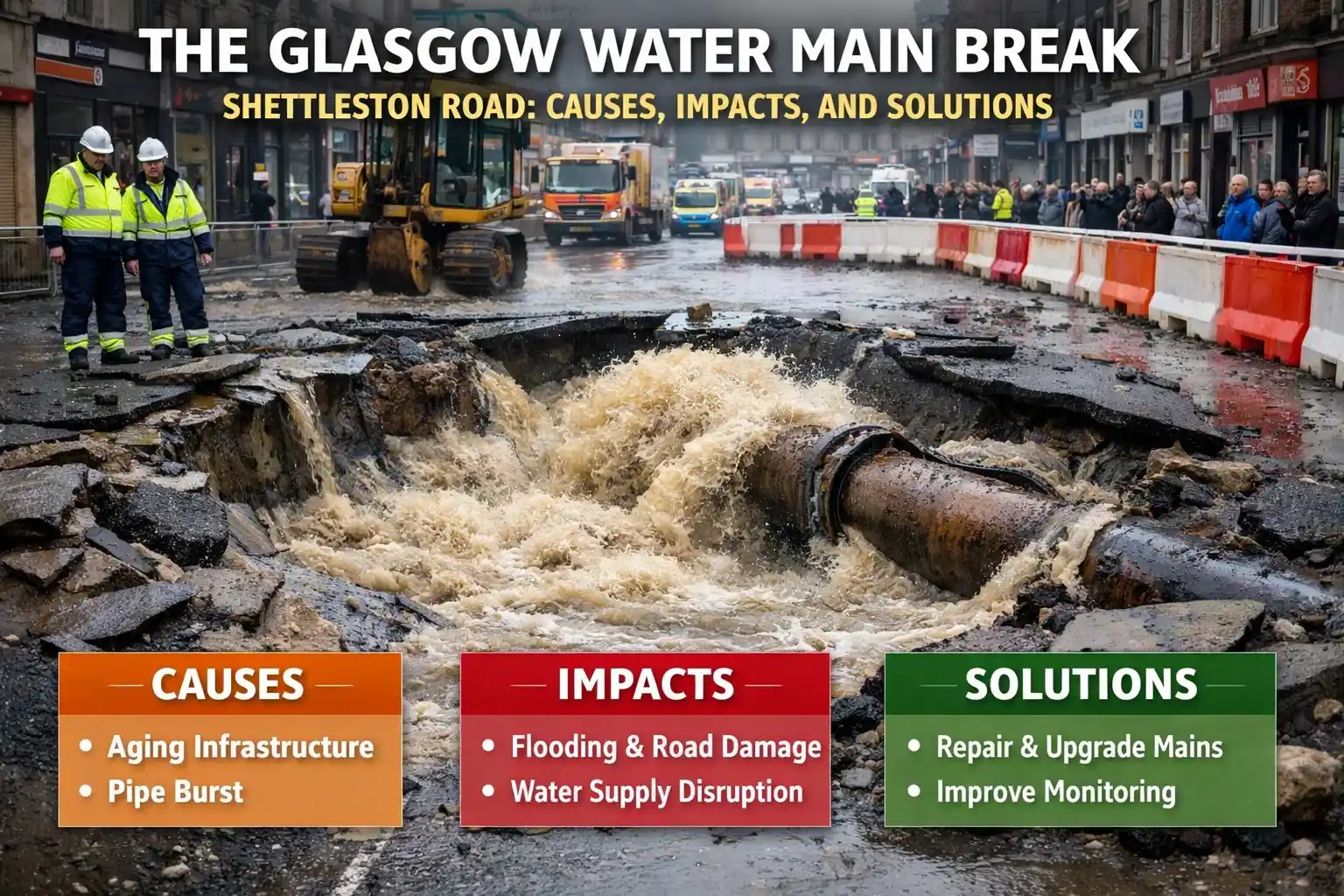
The Glasgow Water Main Break Shettleston Road, which occurred on May 29, 2025, in Glasgow’s East End, disrupted daily life for thousands of residents and commuters. The rupture of a vital water main beneath Shettleston Road led to severe flooding, water supply loss, and extensive traffic disruptions. The incident prompted an immediate response from Scottish Water and local authorities, who worked to repair the damage and restore services. The event underscores the ongoing challenges of aging infrastructure and highlights the importance of proactive maintenance, quick responses, and improved communication strategies for dealing with such emergencies.
Water systems are often taken for granted — until something goes wrong. The Glasgow Water Main Break on Shettleston Road was a major incident that disrupted the lives of residents and businesses in one of Glasgow’s most densely populated areas. As with many cities around the world, Glasgow’s infrastructure, including its water supply networks, is aging and in need of modernization. The event brought to light not only the vulnerability of the city’s water distribution system but also the challenges faced by residents and authorities during such emergencies. In this article, we’ll explore the details of the incident, its causes, immediate impacts, response, and long-term implications.
What Happened: The Incident Overview
On May 29, 2025, a significant water main break occurred beneath Shettleston Road, a key thoroughfare in the East End of Glasgow. The break led to a massive water leak that flooded the surrounding area, including nearby streets and properties. As the G32 postcode area, which includes Shettleston, was affected, many homes and businesses experienced complete or partial loss of water supply.
Local authorities, including Scottish Water, acted swiftly to isolate the damaged section and initiate repairs. However, the incident caused a ripple effect that disrupted daily life, with water supply issues, traffic disruptions, and a general sense of uncertainty in the community.
Location Overview: Shettleston Road and the East End of Glasgow
Shettleston Road is an important arterial route in Glasgow’s East End, which is one of the most densely populated areas in the city. It runs through the Shettleston and Carmyle neighbourhoods, linking various residential zones to the city’s central districts. The East End is home to a mixture of housing estates, commercial areas, and key community facilities, such as schools, healthcare centers, and retail shops.
This area’s infrastructure — including the water distribution network — serves thousands of people every day. The water main that broke was a vital link in this network, responsible for supplying water to a large portion of the G32 region.
Timeline of the Event
-
8:30 AM, May 29, 2025: The first reports of a water main rupture near the junction of Shettleston Road and St Mark Street came in. Local residents noted flooding on the street, with a significant water flow spilling into nearby properties.
-
Morning to Afternoon: Emergency services from Scottish Water arrived on-site, and efforts began to shut off the affected section of the water main. Initial water pressure drops were reported across the affected areas.
-
Midday: Traffic disruptions mounted as parts of Shettleston Road were closed to allow crews to assess and begin repairs. Bus services were diverted, and local road closures were implemented.
-
Afternoon to Evening: Crews continued to dig up the damaged section of the pipeline, working around the clock to repair the rupture and restore normal water supply. Residents were advised to run taps slowly to clear discoloured water as repairs continued.
Causes of the Water Main Break
The causes of water main breaks like the one on Shettleston Road can vary, but they typically stem from a combination of environmental, mechanical, and infrastructural factors. Here are the primary contributors:
a. Ageing Infrastructure
The water main that broke was part of an older pipeline system, which had been in operation for several decades. Cast iron and steel pipes, often used in older infrastructure, are prone to corrosion and weakening over time. The pipes’ vulnerability increases with age, especially when subjected to pressure fluctuations and environmental factors.
b. Environmental Stressors
Glasgow’s climate, including frequent rainfall, freezing temperatures, and thaw cycles, places additional stress on underground water pipes. Over time, this can cause soil movement, which in turn can affect the stability of the pipes. The freeze-thaw cycles of the Scottish winters are notorious for causing underground pipes to shift or crack.
c. Pressure Surges
Water supply systems are often subject to sudden changes in pressure due to variations in demand or sudden shifts in the flow rate. These pressure surges can cause stress on already weakened sections of the pipeline, making them more susceptible to rupture.
Immediate Impacts
Water Supply Disruption
The most immediate and noticeable impact was the disruption to water supply. Residents in Shettleston and surrounding areas found themselves with no water at all, while others experienced low or intermittent pressure. For those who did have water, many reported the water being discoloured due to air and sediment trapped in the system.
Traffic and Transport Chaos
The rupture of the water main caused severe traffic congestion in the East End as Shettleston Road was partially or completely closed. This caused delays for thousands of commuters, particularly during the morning rush hour. Public transport services, such as buses, were rerouted to avoid the flood-prone areas, adding to the inconvenience.
Impact on Local Businesses
Local businesses on Shettleston Road faced significant disruption. Some businesses had to close temporarily, while others managed with limited service due to water shortages. Restaurants and cafes, in particular, were affected, as water shortages hindered food preparation and hygiene.
Response from Authorities
Scottish Water’s Emergency Actions
As the primary utility provider, Scottish Water was the first to respond to the incident. Crews were dispatched immediately to isolate the damaged section of the water main, halting the water flow to prevent further flooding. Once the damage was assessed, Scottish Water began working on repairing the break, which involved excavating the area and replacing the damaged pipe section.
Traffic Management and Safety
Local authorities implemented traffic diversions, ensuring that drivers were safely redirected to avoid the flood-prone areas. Road closures were announced across Shettleston Road, while police and traffic officers helped manage the situation on the ground.
Public Communication and Guidance
Throughout the event, Scottish Water kept the public updated via social media and the company’s website. Residents were advised on how to deal with low or discoloured water and were reassured that repairs were underway. Additionally, the company provided a helpline for residents who needed more detailed information about the water disruption.
The Mechanics of Water Main Breaks
A water main break occurs when a section of pipe fails due to corrosion, stress, or external damage. When the pipe ruptures, water escapes under pressure, flooding the surrounding area. Depending on the size of the break, this can lead to significant flooding, property damage, and service interruptions.
Modern water systems use pressure sensors and monitoring equipment to detect potential issues before they escalate. However, many older systems, such as the one that failed under Shettleston Road, lack the technological capabilities to prevent sudden breaks.
The State of Glasgow’s Infrastructure
Glasgow’s water infrastructure, like many other major cities, is aging. The city’s water network consists of pipes that were installed in the mid-20th century and are now showing signs of wear. Scottish Water has acknowledged that many sections of the network need upgrading to avoid future failures.
This incident underscores the need for investment in water infrastructure renewal. As water demand increases and climate change puts more stress on urban utilities, cities like Glasgow must prioritize upgrading their water systems to meet modern standards.
Broader Economic, Social, and Environmental Effects
Economic Impact
-
Business Disruptions: Many businesses in Shettleston had to close temporarily, which led to lost revenue.
-
Cost of Repairs: The cost to repair the water main and restore service was significant, impacting Scottish Water’s budget.
Social Impact
-
Daily Life Disruptions: For residents, the break led to severe inconvenience, with many being unable to access clean water for daily tasks.
-
Stress and Uncertainty: The disruption created stress for vulnerable populations, including the elderly and those with health conditions requiring water for medical needs.
Environmental Impact
-
Flooding: Escaped water contributed to local flooding, which had the potential to cause property damage.
-
Increased Carbon Emissions: Road closures and traffic diversions led to longer travel times and higher vehicle emissions, contributing to environmental pollution.
Public and Community Reaction
While there was initial frustration, the community largely recognized the efforts of Scottish Water and other authorities to quickly address the situation. Many residents took to social media to share their experiences, ask for updates, and offer support to each other during the crisis. In addition, local businesses coordinated to help one another during the disruptions.
Lessons Learned and Preventive Measures
The Shettleston water main break highlighted several key lessons:
-
Proactive Investment: Aging infrastructure needs constant monitoring and investment to avoid system failures.
-
Enhanced Public Communication: Timely and clear updates can reduce public frustration and confusion.
-
Infrastructure Modernization: Upgrading outdated water systems and incorporating modern monitoring technologies is critical to future-proofing cities against infrastructure breakdowns.
Long-Term Solutions for Glasgow’s Water System
Moving forward, Scottish Water must focus on:
-
Accelerated Pipe Replacement: Replacing old, vulnerable sections of the water network with modern, durable materials.
-
Advanced Monitoring Technology: Using smart sensors and AI-based systems to predict and prevent potential breaks before they occur.
-
Community Engagement: Building trust with the public through clear communication and rapid response to future emergencies.
FAQs
Q1. How long did it take to restore water supply?
A1. Full restoration of water supply took approximately 24 to 48 hours, as repairs were carried out to ensure the system was fully operational again.
Q2. Is the water safe to use after a main break?
A2. Yes, but it may appear discoloured due to trapped air and sediment. Residents are advised to run cold taps slowly until the water clears.
Q3. Can residents claim compensation for the disruption?
A3. Scottish Water may offer compensation for businesses or residents severely affected by the disruption. Claims can be made through their customer service channels.
Conclusion
The Glasgow water main break Shettleston Road was a significant event that exposed the vulnerabilities of the city’s ageing infrastructure. The incident caused disruption but also highlighted the need for modernisation, proactive infrastructure maintenance, and better communication systems. As Glasgow and other cities continue to grapple with infrastructure challenges, it is clear that investment in upgrading essential services is crucial for a resilient, sustainable future.