


Maintaining a functional air conditioning (AC) system in your vehicle is crucial for comfort and safety, especially during the sweltering summer months. A well-functioning AC system ensures that you and your passengers remain cool and comfortable, preventing heat-related discomfort and fatigue. It also contributes to better air quality inside the vehicle by filtering out pollutants and allergens.
One essential tool for keeping your car’s AC in optimal condition is the R134a gas refill kit. This kit plays a vital role in replenishing the refrigerant, which is necessary for the AC’s cooling process. Beyond comfort, a properly functioning AC system can also improve driver alertness and reduce the risk of accidents caused by heat exhaustion during long drives in hot weather.
Understanding Your Vehicle’s AC System
A car’s air conditioning system comprises several key components that work in harmony to provide cool air. Understanding how these parts interact helps you diagnose problems more effectively and appreciate why regular maintenance is essential.
Key Components:
- Compressor:Pumps refrigerant through the system and pressurizes it, acting as the heart of the AC system
- Condenser:Cools and liquefies the refrigerant by dissipating heat to the outside air, typically located in front of the radiator
- Evaporator:Absorbs heat from the cabin air, creating the cooling effect you feel inside the vehicle
- Expansion Valve:Regulates refrigerant flow and controls the pressure drop that allows the refrigerant to evaporate
- Refrigerant:Absorbs and releases heat, enabling the cooling process through phase changes between liquid and gas states
Without sufficient refrigerant, the system cannot effectively cool the air. The refrigerant circulates continuously through these components in a closed-loop system, and any disruption to this cycle can compromise cooling performance.
Signs Your AC System Needs a Recharge
There are several indicators that your car’s AC system may require a recharge. Recognizing these symptoms early can prevent more serious damage and costly repairs:
- Weak or reduced airflow from the vents
- Warm air blowing instead of cold air
- Unusual noises (clicking, hissing, or rattling) when the AC is running
- AC clutch not engaging when the system is activated
- Visible oil residue around AC components, indicating potential leaks
- Ice formation on the AC lines or components
These issues often stem from low refrigerant levels, which can occur due to leaks or natural depletion over time. If you notice these symptoms, it’s essential to address them promptly to prevent further damage to the system and avoid compressor failure, which can be expensive to repair.
Choosing the Right R134a Gas Refill Kit
Selecting the right R134a gas refill kit is crucial for a successful AC recharge. Not all kits are created equal, and using the wrong type can lead to poor performance or system damage.
Factors to Consider:
- Compatibility with your vehicle:Verify that your car uses R134a refrigerant (most vehicles manufactured after 1994)
- Inclusion of necessary toolslike a pressure gauge for accurate monitoring
- Reputation of the brand and customer reviews
- Kit contents:Look for kits that include a hose, trigger dispenser, and clear instructions
- Refrigerant quantity:Ensure the kit contains enough refrigerant for your specific vehicle’s capacity
Using a high-quality kit ensures the safety and effectiveness of the recharge process. Moreover, it is vital to use the correct kit to avoid potential damage to your vehicle’s AC system and ensure proper operation. Some premium kits also include leak detection dye, which can help identify leaks in the system for future troubleshooting.
Step-by-Step Guide to Recharging Your AC System
#1 Preparation
Before you begin, gather all necessary tools and materials, including the R134a gas refill kit, safety goggles, and gloves. Ensure your vehicle is parked on a level surface in a well-ventilated area, and the engine is off. Review your vehicle’s manual to determine the correct refrigerant capacity and locate the service ports.
#2 Locate the Low-Pressure Service Port
The low-pressure service port is typically located on the larger of the two AC lines, between the compressor and the evaporator. It usually has a black or blue cap marked with an “L” or “LOW.” Consult your vehicle’s manual if you have trouble finding it. The port is designed to prevent incorrect connections—the low-pressure port has a different diameter than the high-pressure port.
#3 Connect the Refill Kit
Attach the hose from the refill kit to the low-pressure service port. Remove the protective cap from the port first, then firmly press the connector onto the port until you hear a click. Ensure the connection is secure to prevent leaks and refrigerant loss during the charging process.
#3 Recharge Process
- Start the engine and set the AC to its maximum cooling setting with the fan on high
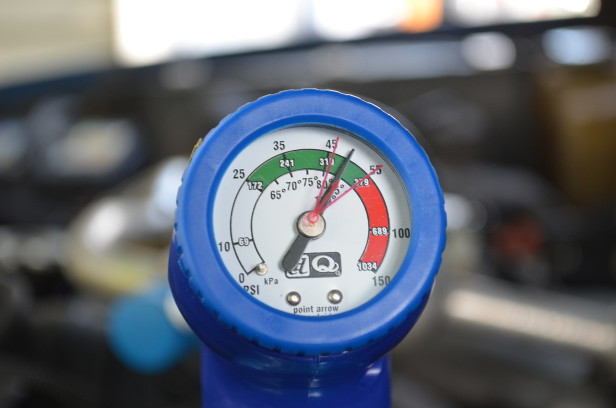
- Monitor the pressure gauge on the refill kit, which should indicate the current pressure level
- Add refrigerant in short bursts (3-5 seconds each), shaking the can gently between bursts
- Keep an eye on the gauge to avoid overfilling—the ideal pressure range is typically between 25-45 PSI, depending on ambient temperature
- Allow time between bursts for the refrigerant to circulate through the system
- Stop adding refrigerant when the gauge reaches the recommended pressure for your ambient temperature
Final Checks
After recharging, check for leaks by listening for hissing sounds or using a leak detection solution around connections and AC components. Ensure the system is cooling effectively by testing the air temperature at the vents—it should be approximately 35-45°F (1.5-7°C) cooler than the ambient temperature. Verify that the AC clutch is engaging properly and that there are no unusual noises or vibrations.
Safety Precautions and Best Practices
Handling refrigerants and tools requires caution and attention to safety protocols. R134a is a pressurized substance that can cause frostbite upon direct skin contact and should be handled with care.
Important Safety Measures:
- Always wear protective gear, such as safety goggles and gloves, to prevent injury
- Work in a well-ventilated area to avoid inhaling refrigerant vapors
- Never smoke or work near open flames, as refrigerants can decompose into toxic gases when exposed to high heat
- Avoid overfilling the system, which can damage the compressor and other components
- Ensure all connections are secure before starting the recharge process
- Never vent refrigerant directly into the atmosphere—this is illegal in many jurisdictions and harmful to the environment
- Store refrigerant cans in a cool, dry place away from direct sunlight and heat sources
Follow the instructions provided with the refill kit carefully to ensure a safe and successful recharge. If you’re unsure about any step or encounter unexpected issues, consult a professional automotive technician.
Maintaining Your AC System After a Recharge
Regular maintenance is key to keeping your AC system in top condition and avoiding frequent recharges. A proactive approach can save you money and extend the lifespan of your AC components.
Maintenance Tips:
- Schedule periodic checks (at least annually) to ensure refrigerant levels are adequate
- Inspect for leaks regularly, paying attention to connections, hoses, and seals
- Use leak stoppers if necessary, though these are temporary solutions
- Consider professional inspections to catch potential issues early, especially before summer
- Run your AC system for 10-15 minutes at least once a month, even during winter, to keep seals lubricated and prevent deterioration
- Replace the cabin air filter regularly to maintain airflow and air quality
- Check and clean the condenser fins periodically to ensure proper heat dissipation
- Monitor AC performance and address any changes in cooling efficiency immediately
Proactive maintenance not only extends the life of your AC system but also ensures consistent performance and comfort. Regular attention to your AC system can prevent small issues from becoming major repairs.



Leave a Reply